What is the real trade-off between the two home types?
The main trade-off is control of the space around the home. Zero-lot-line describes where the structure sits on its lot, not whether it is attached to another home. A zero-lot-line home can be detached while one wall sits on or very near a property boundary. That can create a more efficient lot and less outdoor area to maintain. It can also make side-yard access, repairs, drainage, windows, fences, and utility equipment more dependent on documents or shared arrangements.
A conventionally set-back home often gives the owner more clearance from property lines and more independent exterior access. That can make a larger yard, wider side clearance, or flexible outdoor use easier to plan. It also means more land, landscaping, exterior surfaces, and drainage paths to understand and maintain. More space does not remove the need to inspect the property and read its documents.
The right comparison depends on how you use the home. A buyer who wants a smaller outdoor workload may prefer the efficient lot if the access rights and exterior responsibilities are clear. A buyer who wants a garden, side-yard storage, privacy, or room for contractors may place more value on clearance and control. Treat those preferences as questions to verify against the exact home.
Do not rely on the listing label alone. Walk both side yards, look at the survey, and ask how each area functions. Pete’s New Braunfels condo and townhouse comparison can help frame the separate attached-versus-detached question, but either type still needs its own survey, title, access, and maintenance review.
Which documents should a buyer compare before making an offer?
Start with the current survey, title exceptions, recorded easements, and the HOA declaration or rules that apply to the property. These documents answer different questions. The survey helps you see boundaries and improvements. Easements may affect who can use or enter an area. HOA documents may limit exterior changes or assign responsibilities. Ask the responsible professional to explain any provision you do not understand.
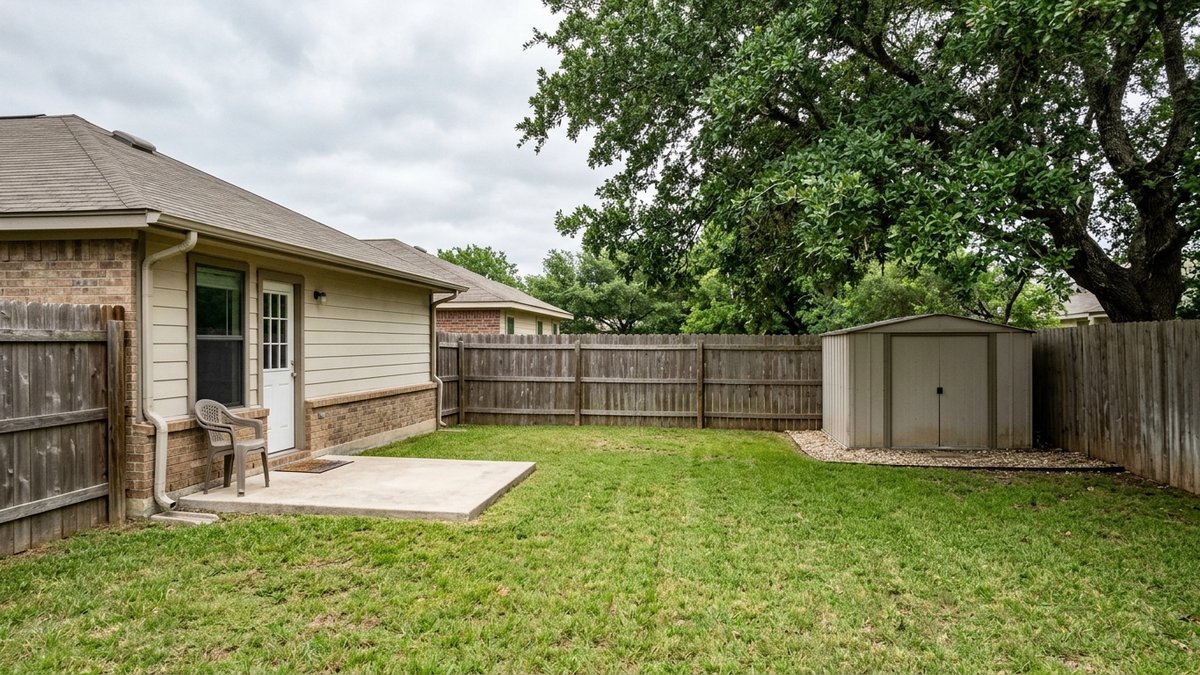
Compare the documents with what you can see. Look for the distance between the structure and the boundary, fences, gates, roof overhangs, windows, air-conditioning equipment, utility connections, patios, and other improvements near a side line. Mark anything that appears to cross, touch, or depend on the neighboring area. A small strip of ground can be important if it is the only practical route for maintenance or equipment replacement.
Ask the seller for known information about physical conditions, prior repairs, water entry, drainage work, boundary disagreements, and shared improvements. The Texas Real Estate Commission’s Seller’s Disclosure Notice is a starting point for reviewing information the seller may provide for an applicable resale. It is not a substitute for your own inspection, document review, or professional advice about a specific transaction.
Keep a separate list for each home. Write the document name, property address, date, question, and person responsible for the answer. Pete’s New Braunfels easement buyer questions offers a useful way to organize access and boundary questions. If one property requires several assumptions while the other has clear records, that difference belongs in the comparison.
Who controls maintenance access and exterior changes?
Ask who may enter each narrow side yard, when entry is allowed, and who pays for work there. A buyer should understand access for roof repairs, exterior painting, fence work, pest treatment, drainage work, air-conditioning service, utility work, and other contractor tasks that may need room beside the home. The answer may depend on an easement, a recorded right, an HOA document, a neighbor agreement, or the physical design of the lots.
Ask who maintains fences, walls, gates, drainage features, shared surfaces, and improvements that sit near the boundary. Also ask whether the owner can replace a fence, add a gate, install a shed, change landscaping, screen a window, or alter a side-yard surface. Do not assume that being able to reach an area means you can change it, or that an HOA rule covers every maintenance responsibility.
Exterior control can affect daily convenience and future cost. A narrow passage may be enough for a person but not for equipment. A gate may exist but not provide a practical route for a contractor. An air-conditioning unit may be visible from a side yard while the service area is harder to reach. Record what you observe and ask the inspector, survey professional, title or closing professional, HOA, or other responsible party to verify the answer.
Pete’s New Braunfels HOA rules before an offer can help you prepare questions about exterior restrictions. Read the actual documents for the home you are considering. The comparison should show both the permission and the responsibility, including who must act, who pays, and what happens if access is disputed.
How should buyers compare privacy, drainage, insurance, and yard use?
Compare the way each property works in ordinary daily life. Walk the side yards and note window placement, fence height, gates, patio exposure, neighboring walls, and the distance between outdoor areas. Consider where you would place furniture, trash containers, tools, or a grill, then check whether the space is usable and permitted. A larger yard is only an advantage if the buyer can use it in the way intended.
Trace roof and surface water around both homes. Note grading, downspout discharge, low spots, swales, retaining walls, erosion, and places where neighboring runoff may cross the property. A zero-lot-line layout may leave fewer places for water to move or for a person to reach a wall. A detached layout may have more room but more area to inspect. Neither layout proves that drainage is good or poor. Use the survey, inspection, disclosures, and qualified follow-up for property-specific questions.
Get insurance information for the exact property before treating one option as cheaper to own. The Texas Department of Insurance advises shoppers to compare coverage and deductible details and avoid gaps in coverage. Ask for a quote or other current information from a licensed insurance professional, then compare the dwelling, exterior features, attached improvements, water-related concerns, and deductible assumptions that apply to each home.
Also compare the monthly and seasonal work you would accept. A smaller yard may reduce mowing and landscaping, while a detached lot may offer more choices and more upkeep. Pete’s New Braunfels insurance comparison guide can help you build the insurance part of the review. Keep insurance, maintenance, and yard-use answers separate from any estimate of price or resale value.
What should go in a two-property decision grid?
Use one row for each question and one column for each home. Add a final column for who verifies the answer and another for the date or transaction milestone by which the answer is needed. A clear grid prevents a buyer from comparing a known feature of one home with an assumption about the other.
Include boundary clearance, side-yard width, legal maintenance access, easements, fence rights, gates, roof overhangs, windows, HVAC and utility access, drainage, privacy, HOA exterior rules, insurance quote, deductible, yard use, monthly cost, maintenance workload, and likely resale audience. Mark each item as verified, estimated, or unresolved. The unresolved column matters because it shows where the decision still depends on a document or professional review.
For each unresolved item, write the next action. The current survey may need to be reviewed with a survey professional. An easement may need a title or closing professional to explain its recorded purpose. A visible drainage path may need inspection or engineering follow-up. An HOA restriction may require the declaration, amendments, and current rules. An insurance question needs the exact property and a licensed insurance source.
Before the option period ends, ask your agent and the appropriate professionals which questions need answers for your transaction. This article cannot interpret a contract, set a deadline, or give legal, insurance, or financial advice. It can help you see the decision clearly. If you want help organizing your New Braunfels buyer questions, use the contact page and bring the survey, documents, observations, and open items to the conversation.